
2024 – First Restoration Work
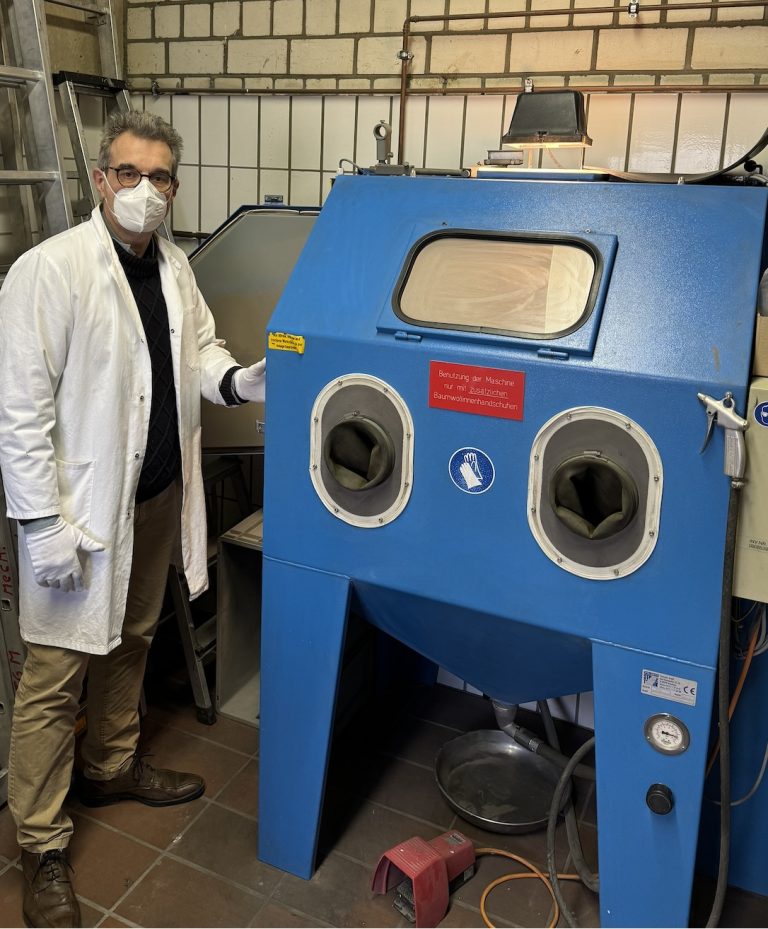
In 2024, we began the first restoration work using a small sandblasting cabinet in Detlef Diesing’s laboratory. During the summer, Thomas Legoirers visited us in Düsseldorf-Wersten to see the engine and the progress we had made.
The small sandblasting cabinet
The small sandblasting cabinet allowed Detlef to carry out an initial assessment of the engine. By carefully removing corrosion and deposits, we hoped to reveal further details and markings that could provide additional information about the engine.
First findings
The careful removal of corrosion revealed details that had previously been hidden, including this serial number.
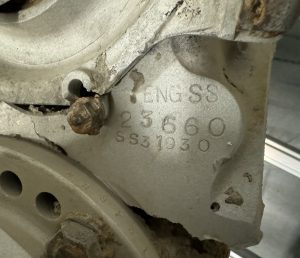
The cleaning work revealed several important clues:
- Numbers beginning with “SS” are manufacturer’s serial numbers used by Bristol.
- Bristol Hercules engines were assigned individual serial numbers with the prefix “SS”.
- Serial numbers found on surviving original components fall within a range that is consistent with the number SS31930 found on the Wersten engine.
This strongly suggests that SS31930 is the original Bristol factory serial number of the Wersten engine – the engine from the aircraft that was shot down on Christmas Eve 1944 and came down near the Brückerbach. This, in turn, fits perfectly with the material published by the Allied Forces Heritage Group.
The cleaning work revealed several important clues:
- Numbers beginning with “SS” are manufacturer’s serial numbers used by Bristol.
- Bristol Hercules engines were assigned individual serial numbers with the prefix “SS”.
- Serial numbers found on surviving original components fall within a range that is consistent with the number SS31930 found on the Wersten engine.
This strongly suggests that SS31930 is the original Bristol factory serial number of the Wersten engine – the engine from the aircraft that was shot down on Christmas Eve 1944 and came down near the Brückerbach. This, in turn, fits perfectly with the material published by the Allied Forces Heritage Group .
Work on larger engine components
Because of the limited power of the small sandblasting cabinet, cleaning the larger engine components would have taken an unreasonable amount of time.
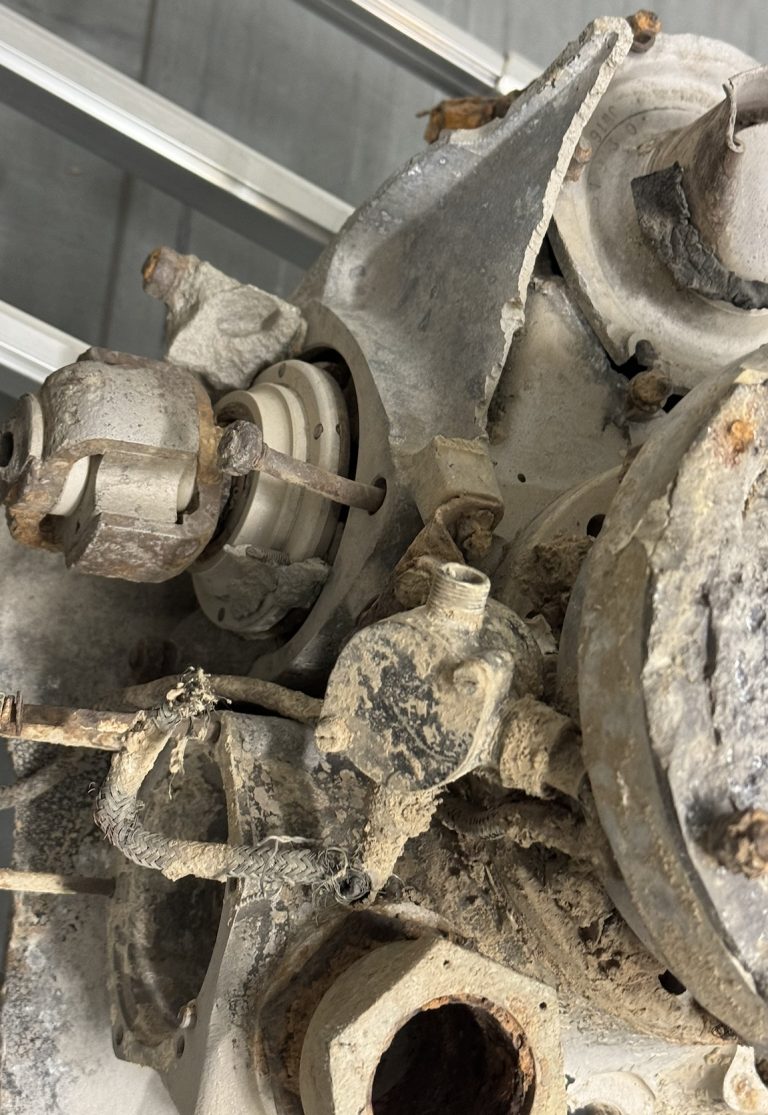
After four hours of sandblasting
After four hours of sandblasting, the component could be identified as part of the supercharger housing. The remaining gears and drive components are characteristic of the rear section of the Bristol Hercules engine, where the centrifugal supercharger and the accessory drives were located.
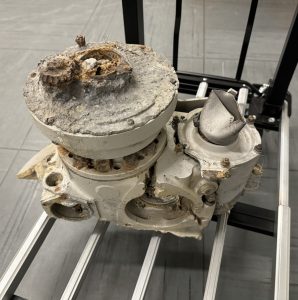
On the right-hand side, one of the accessory-drive housings can still be seen. This area contained drives for components such as the oil pump, fuel pump and magnetos.
The overall shape and construction of the casting are characteristic of the rear section of a Bristol Hercules engine.
The work also made one limitation clear: the small sandblasting cabinet was not suitable for restoring the entire engine. For the larger components, we would need outside help.
Thomas’s visit to Düsseldorf-Wersten in June 2024
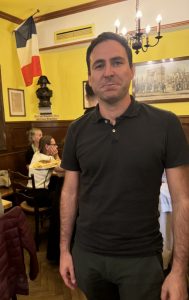
Thomas Legoirers is the son of Geneviève Monneris. Geneviève, in turn, is the daughter of the rescued French soldier André Guédez. Thomas is therefore his grandson.
Thomas documents the engine
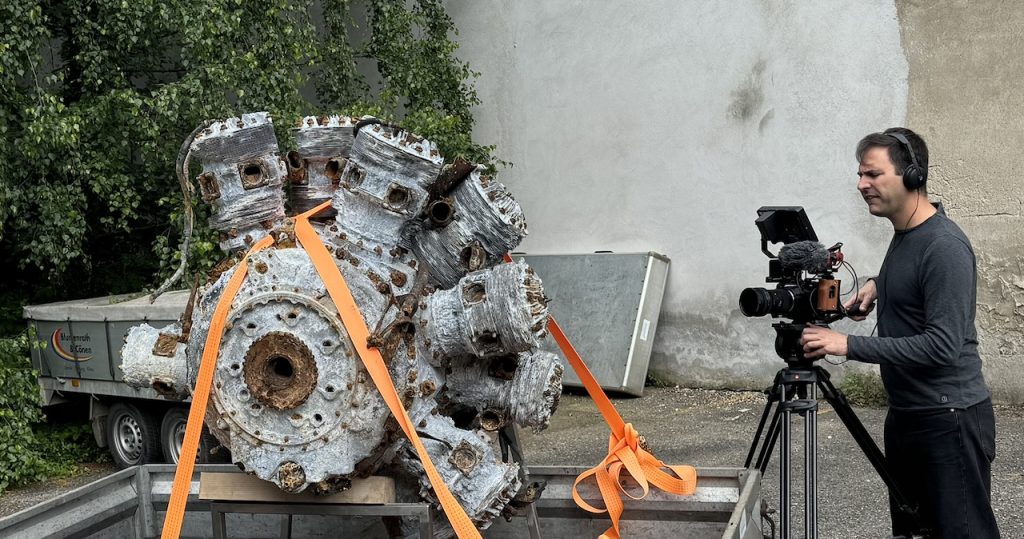
After examining the engine, we invited Thomas to join us at the French Corner at the Schiffchen restaurant in Düsseldorf’s Old Town.